
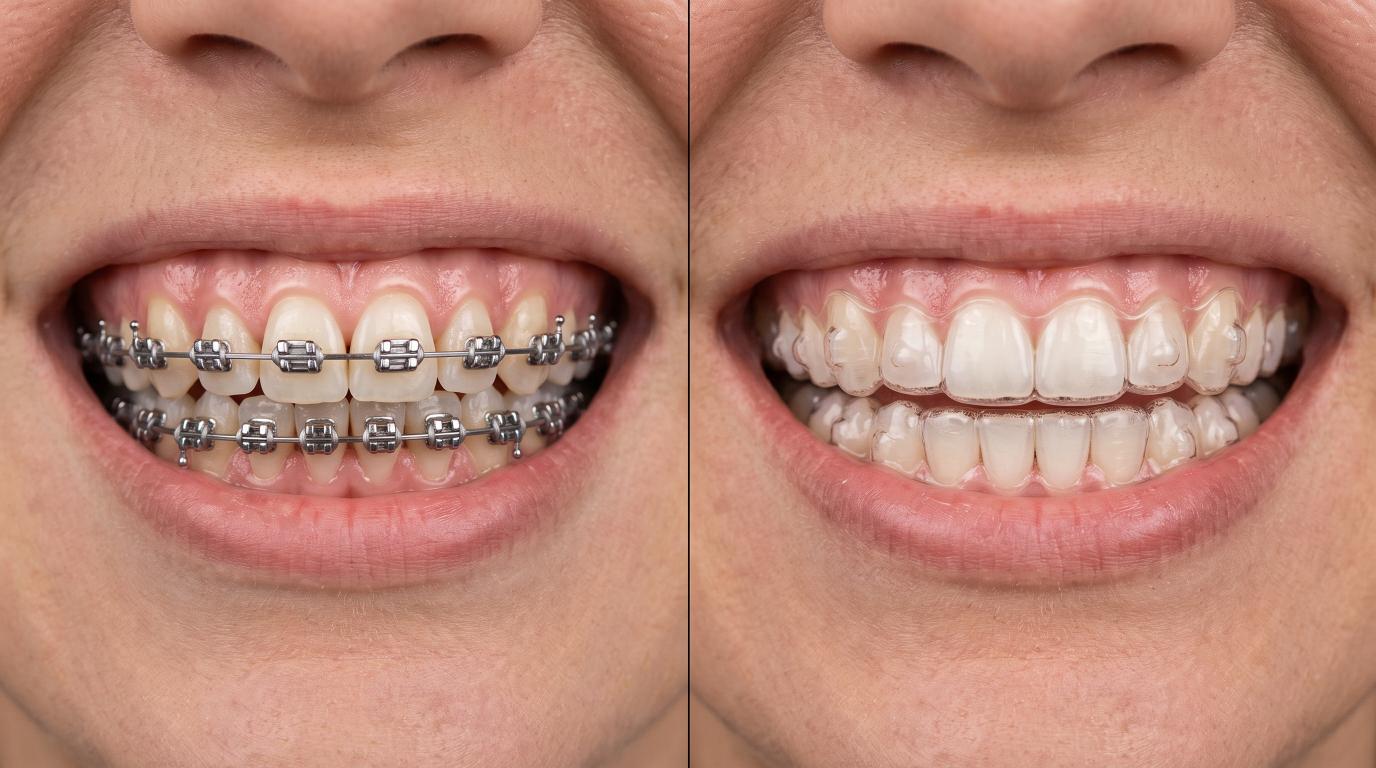
Choosing braces or Invisalign depends on your teeth, bite, age, lifestyle, and treatment goals. Invisalign may be a good choice if you want a less visible and removable option. Braces may be better when more complex tooth or bite correction is needed.
At Estrella Mountain Dentistry in Goodyear, AZ, your treatment choice begins with an examination of your teeth, gums, jaw, and bite. Your dentist can explain which option may provide the control and results needed for your smile.
Both treatments can straighten teeth and improve many bite problems. The main differences involve appearance, removability, food choices, cleaning, comfort, and the amount of responsibility required from the patient.
Should You Choose Braces or Invisalign?
You may prefer Invisalign if your orthodontic problem can be treated with clear aligners and you can wear them as directed each day. The trays are removable, less noticeable, and easier to take out when brushing, flossing, or eating.
Braces may be a better choice if your teeth need more complex movement or you do not want to manage removable trays. Since braces stay attached, they continue working without depending as much on your daily habits.
Braces vs. Invisalign at a Glance
|
Factor |
Braces |
Invisalign or Clear Aligners |
|
Appearance |
Visible brackets and wires |
Clear and less noticeable |
|
Removability |
Fixed to the teeth |
Removed for eating and cleaning |
|
Effectiveness |
Useful for simple and complex cases |
Useful for many mild to moderate cases |
|
Treatment time |
Depends on the case |
Depends on the case and daily wear |
|
Comfort |
Pressure and possible wire irritation |
Pressure without brackets |
|
Food limits |
Some hard and sticky foods avoided |
Most foods allowed after removal |
|
Oral hygiene |
More steps around brackets |
Teeth are easier to reach |
|
Discipline |
Less dependent on memory |
Requires reliable daily wear |
|
Cost |
Varies by case |
Varies by case and aligner system |
How Do Braces and Invisalign Work?
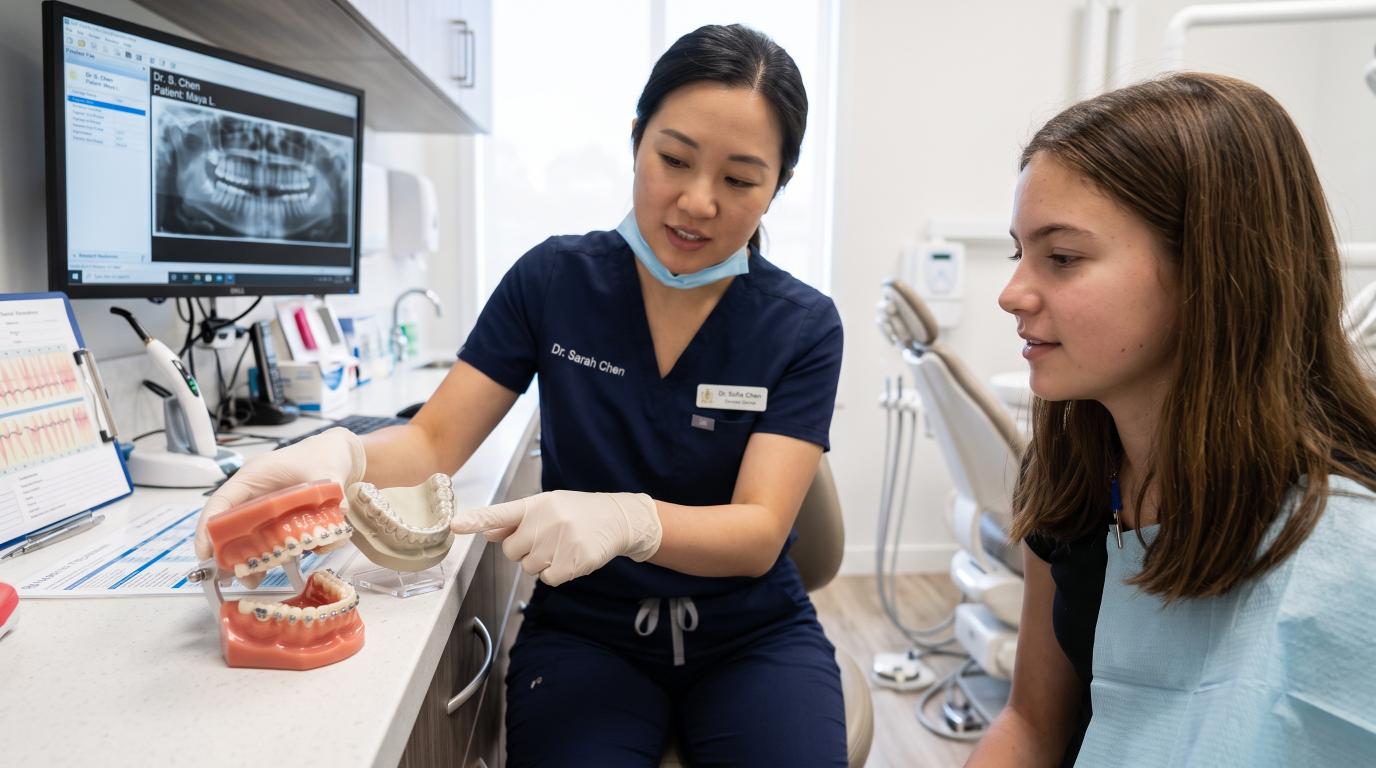
Braces use brackets attached to the teeth and an archwire that connects them. The wire places controlled pressure on selected teeth. During checkups, the provider may adjust the wire, change elastics, or use other parts to guide movement.
Because braces stay in place, they keep working without the patient needing to remember them. This may help children, teens, and adults who could struggle with removable trays.
Invisalign and other clear aligners use a series of thin trays made to fit over the teeth. Each tray moves the teeth a small amount before the patient changes to the next set. Tooth-colored attachments may help the trays grip and guide movement.
Clear aligners are often worn for about 22 hours a day and removed for meals, brushing, and flossing. Wearing them less than prescribed can slow treatment or affect the result.
What Is the Main Difference Between Braces and Invisalign?
The main difference between braces and Invisalign is that braces are fixed to the teeth, while Invisalign uses removable clear aligners. Braces use brackets and wires to move the teeth and work all day without the patient needing to remember anything. Invisalign trays can be removed for eating, brushing, and flossing, but they must be worn for most of the day to keep treatment on track.
Braces are more visible but may provide better control for complex tooth and bite problems. Invisalign is less noticeable and often more convenient for eating and cleaning. However, it requires more patient responsibility because leaving the trays out too long can delay treatment.
Which Is More Effective: Braces or Invisalign?
Braces and Invisalign can both straighten teeth, but their effectiveness depends on the type and complexity of the problem. Invisalign works well for many mild to moderate cases, while braces may provide better control for difficult tooth movements and severe bite issues.
Orthodontic Problems Invisalign Can Treat
Invisalign may treat mild to moderate crowding, gaps, crooked teeth, and selected bite problems. It may also improve some overbites, underbites, crossbites, and open bites. The result depends on the type of movement needed and how well the patient follows the treatment plan.
Orthodontic Problems Braces Can Treat
Braces can treat a wide range of tooth and bite problems. They may be recommended for severe crowding, difficult rotations, large gaps, or movements that require stronger control over the tooth roots. They may also work better when a patient is unlikely to wear removable aligners as directed.
Which Option Is Better for Complex Cases?
Braces are often preferred for complex orthodontic problems because they can provide steady and detailed control. However, some difficult cases can still be treated with Invisalign when attachments, elastics, or other methods are used. An examination, X-rays, and digital scans are needed before deciding which option will work best.
Pros and Cons of Invisalign
Invisalign offers a clear and removable way to straighten teeth. The trays are less noticeable than braces and can be removed for meals, brushing, and flossing. This means there are fewer food restrictions and it is usually easier to keep the teeth clean during treatment.
The main drawback is that Invisalign requires strong daily discipline. The trays must be worn as directed and can be lost or damaged if they are not stored properly. Some patients may also need visible attachments, elastics, or extra refinement trays, and Invisalign may not be suitable for every complex orthodontic problem.
Pros and Cons of Braces
Braces can treat many simple and complex orthodontic problems. Since they stay fixed to the teeth, they work continuously and do not depend on the patient remembering to wear them. They also give the dentist strong control over tooth position, root movement, and bite correction.
The main drawbacks are visibility, food restrictions, and more difficult cleaning. Brackets and wires may irritate the cheeks, and hard or sticky foods can damage the appliance. Brushing and flossing also require more care to prevent plaque, cavities, and gum problems.
Braces or Invisalign for Different Orthodontic Problems
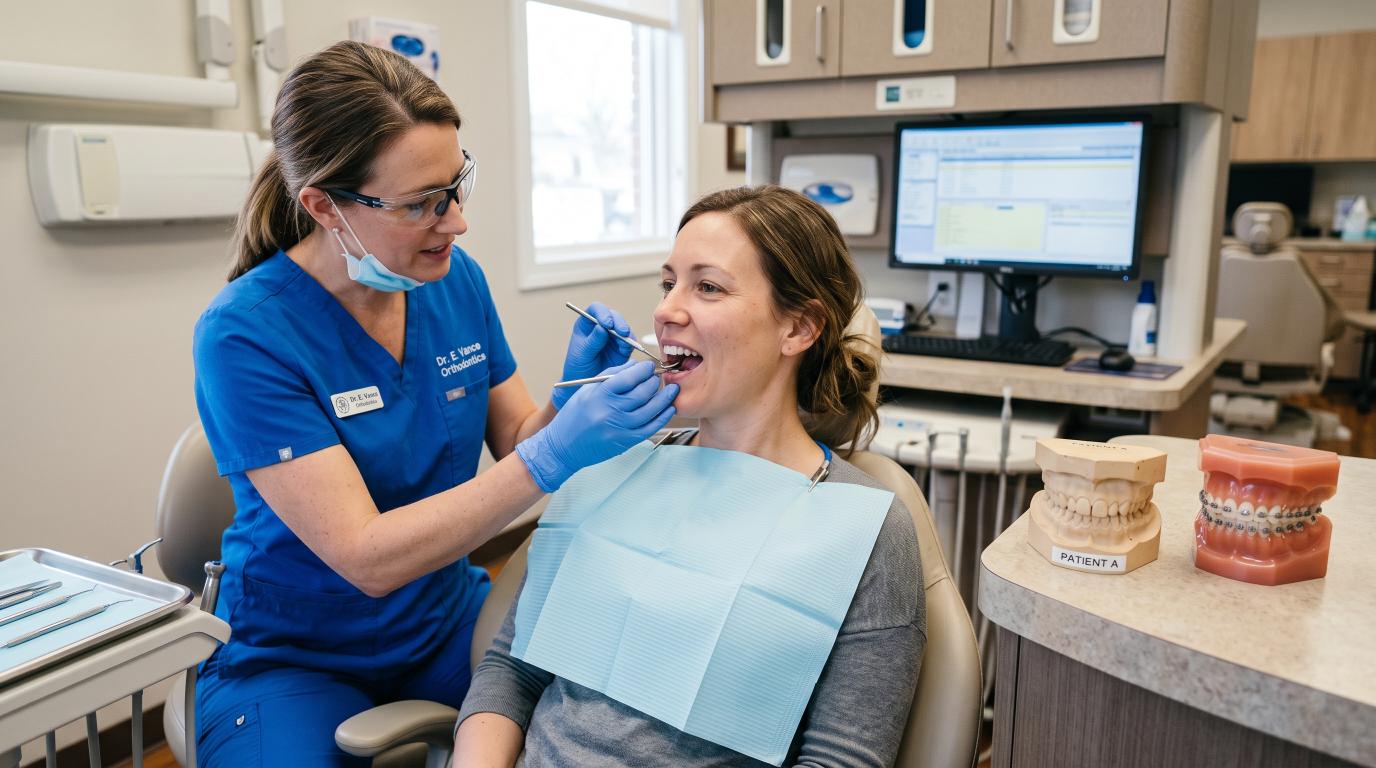
Braces and Invisalign can treat many orthodontic problems, but the better option depends on the type and complexity of the tooth or bite issue.
Crowded or Crooked Teeth: Both braces and Invisalign can treat many crowded or crooked teeth. Mild crowding may respond well to aligners, while severe crowding may need the stronger control provided by braces.
Gaps Between Teeth: Small and moderate gaps may be closed with either treatment. Large spaces or gaps linked to missing teeth may require a more detailed plan.
Overbite and Underbite: Invisalign and braces can both improve certain overbites and underbites. Elastics may be used with either treatment to guide the bite.
Crossbite and Open Bite: Some crossbites and open bites can be treated with Invisalign. Braces may be better when the problem involves several teeth or requires more controlled movement.
Rotated Teeth and Complex Tooth Movement: Severely rotated teeth may be difficult to move with clear trays. Braces can often provide stronger and more direct control for these movements.
Jaw Alignment and Severe Bite Problems: Braces and Invisalign mainly move teeth. They cannot correct every problem involving jaw growth or severe jaw imbalance.
Which Is Faster: Braces or Invisalign?
Invisalign may be faster for some mild cases, but it is not always quicker than braces. Treatment time depends on how far the teeth must move, the type of bite problem, and how well the patient follows instructions.
Invisalign treatment may take longer if the trays are not worn enough. Braces may be delayed by broken brackets, missed appointments, or failure to wear elastics. Your dentist can provide a more useful estimate after reviewing your teeth and bite.
Which Is More Comfortable: Braces or Invisalign?
Both treatments can cause pressure and soreness because the teeth are moving. Invisalign trays may feel tight when a new set is started, but they do not have metal brackets that rub against the cheeks.
Braces may cause more irritation during the first few weeks. Soreness can also return for a short time after an adjustment. Most discomfort improves as the mouth adapts. Severe or lasting pain should be checked by a dental professional.
Braces vs. Invisalign for Eating and Daily Life

|
Daily Activity |
Braces |
Invisalign |
|
Eating |
Braces stay on while you eat. |
Aligners must be removed before eating. |
|
Food restrictions |
Avoid hard, sticky, chewy, and crunchy foods. |
Most foods are allowed after removing the trays. |
|
Drinking |
Most drinks are allowed, but sugary drinks can raise the risk of cavities. |
Remove aligners for drinks other than plain water. |
|
Cleaning |
Brush carefully around brackets and wires after meals. |
Brush your teeth and clean the trays before putting them back in. |
|
Work and social events |
Braces remain visible at all times. |
Clear trays are less noticeable and can be removed briefly when needed. |
|
Sports |
An orthodontic mouthguard may be needed. |
Aligners are usually removed before contact sports, and a mouthguard should be worn. |
|
Musical instruments |
Brackets may take time to adjust to when playing wind instruments. |
Aligners may feel unusual at first, but most players adjust with practice. |
|
Daily responsibility |
No need to remember to wear the appliance. |
Trays must be worn as directed each day to keep treatment on track. |
Which Is Easier to Clean?
Invisalign often makes daily cleaning easier because the trays can be removed. Patients can brush and floss normally before cleaning the trays and placing them back in. Braces require more attention around brackets, wires, and the gumline. Small brushes, floss threaders, or water flossers may help remove trapped food.
Good oral hygiene is important with both options. Poor cleaning can lead to plaque, cavities, gum irritation, bad breath, or marks on the teeth.
Braces or Invisalign for Adults, Teens, and Children
Adults often prefer Invisalign because it is less visible. Braces may still be better for complex treatment or for people who do not want to manage removable trays.
Responsible teens may do well with aligners if they can wear and store them correctly. Teens who often forget or lose items may have better results with braces.
Braces are often easier for younger children because they stay in place. Age alone does not decide treatment. Tooth development, jaw growth, bite problems, and maturity also matter.
How Much Do Braces and Invisalign Cost?
The cost of braces or Invisalign depends on the complexity of the case, treatment length, appliance type, and number of visits needed. A simple aligner case may cost less than a complex braces case, but Invisalign is not always the cheaper option.
Dental insurance may cover part of orthodontic treatment. Payment plans may also be available. Before starting, ask what the total price includes. Records, scans, retainers, repairs, and extra trays may affect the final cost.
How Often Are Orthodontic Appointments Needed?
Both braces and Invisalign require regular progress checks. Braces visits may include wire adjustments, elastic changes, and repairs.
Invisalign visits may be used to check tray fit, tooth movement, attachments, and bite changes. Patients may also receive several new sets of trays. Extra visits may be needed if an aligner is lost, a bracket breaks, or the teeth are not moving as planned.
How to Choose Between Braces and Invisalign
Start with the complexity of your case. Then consider appearance, food choices, cleaning, sports, work, school, and your ability to wear aligners every day.
Ask whether you can remove trays for meals, keep them clean, store them safely, and wear them for the required hours. If not, fixed braces may be more practical.
Compare the full plan, not only the starting price. Ask what is included, how long treatment may take, and what happens if teeth do not move as planned.
Schedule a Braces or Clear Aligner Consultation in Goodyear
If you are still unsure whether braces or Invisalign is right for you, Estrella Mountain Dentistry in Goodyear, AZ can help. A dental evaluation can show which treatment fits your teeth, bite, lifestyle, and smile goals.
Schedule a consultation today to compare your orthodontic and clear aligner options and receive a treatment plan based on your needs.
Conclusion
Braces and Invisalign can both straighten teeth, improve bite problems, and support a healthier smile. Invisalign may be better for people who want a less visible option, easier cleaning, and fewer food restrictions. Braces may be better for complex movements or patients who prefer a fixed appliance.
The best choice depends on your tooth position, bite, age, budget, and daily habits. An in-person examination at Estrella Mountain Dentistry in Goodyear, AZ can help you understand your options and choose the treatment that is most suitable for your smile.
Frequently Asked Questions
Are braces more effective than Invisalign?
Braces may be more effective for severe crowding, difficult rotations, and complex bite problems. They stay fixed and give the provider steady control over tooth movement. Invisalign can still treat many mild to moderate cases. The best option depends on your teeth, roots, jaw, and bite.
Is Invisalign more painful than braces?
Both treatments can cause pressure and soreness as the teeth move. Invisalign trays may feel tight when a new set is started. Braces may cause more rubbing against the cheeks and lips. Most discomfort improves after the mouth adjusts.
Is Invisalign faster than braces?
Invisalign may be faster for some simple cases, but it is not always the quickest choice. Treatment time depends on the amount and type of movement needed. Wearing the trays as directed is also important. Braces may work more efficiently for some complex cases.
Which Is Cheaper, Braces or Invisalign?
The cost depends on case complexity, treatment length, appliance type, and required visits. Invisalign is not always more expensive, and braces are not always cheaper. Insurance may cover part of either treatment. Ask what is included before comparing prices.
Can Invisalign Treat an Overbite or Underbite?
Invisalign can treat some mild to moderate overbites and underbites. Attachments or elastics may be used to help guide the teeth and bite. Severe problems may require braces or other orthodontic care. A dental examination is needed to determine suitability.
Which Option Is Better for Adults?
Many adults prefer Invisalign because the trays are clear and removable. Braces may be better when complex movement is needed or daily tray wear may be difficult. Both options can work well for adults with healthy teeth and gums. The final choice depends on treatment needs and lifestyle.
Do You Need a Retainer After Braces or Invisalign?
Yes, retainers are normally needed after both treatments. Teeth can shift if they are not held in their new positions. Your dentist may recommend a removable retainer, a fixed retainer, or both. Wearing it as directed helps protect your new smile.
