
Your dental crown just fell out. You’re probably worried, but you don’t feel any pain. Maybe you’re thinking this can wait until Monday, or wondering if it’s really that serious.
Here’s the truth: even when there’s no pain, a lost crown needs quick attention. Your tooth is now exposed and at risk. This guide will show you exactly what to do right now to protect your tooth and avoid bigger problems later.
What is a Dental Crown?
A dental crown is like a cap that covers a damaged tooth. Think of it as a helmet for your tooth. Dentists put crowns on teeth that are cracked, have big fillings, or are too weak to bite and chew normally.
There are two main types. Temporary crowns stay on for a few weeks while your permanent one is being made. Permanent crowns are built to last 10 to 15 years. Both can fall out, but temporary ones come loose more often because they use weaker cement.
Why Dental Crowns Fall Out
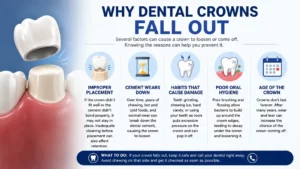
Crowns don’t just fall out for no reason. Several things can cause this to happen. Understanding why helps you prevent it from happening again. Sometimes the crown wasn’t put on right the first time. If the fit was poor or the cement didn’t stick well, it wouldn’t stay put. The dentist might not have cleaned the tooth properly before putting the crown on.
Other times, the cement just gets old and weak. Years of chewing, hot coffee, and cold ice cream can break down the glue that holds your crown. This is normal wear that happens over many years. Bad habits can also knock crowns loose. Grinding your teeth at night puts huge pressure on your dental work. Chewing ice, hard candy, or using your teeth to open packages can pop a crown right off.
Poor mouth care is another big cause. When you don’t brush and floss well, bacteria build up around the crown edges. This can cause decay under the crown, making it loose and wobbly.
What Happens If a Crown Falls Out?
When a crown falls out, the tooth underneath loses its protective covering. This exposed tooth is more vulnerable to bacteria, sensitivity, cracks, and decay. In some cases, nearby teeth may shift slightly, making it harder to place the crown back properly. Acting quickly can often save the crown and avoid more expensive dental procedures later.
Temporary Crown Fell Out But It Doesn’t Hurt, Is It Urgent?
Yes, even if there is no pain, a temporary crown that falls out still needs attention quickly. Temporary crowns protect a prepared tooth that is often sensitive and vulnerable to bacteria, shifting, and damage. Without the crown, the tooth can move slightly, making it harder for the permanent crown to fit correctly later. Contact your dentist as soon as possible and avoid chewing on that side until the crown is replaced.
What to Do Right Now
Don’t panic – you can handle this. Take a deep breath and follow these steps. Acting quickly now can save you time, money, and pain later.
Find and Save Your Crown
Look around where you were eating or noticed it was gone. Check your food carefully, you don’t want to accidentally swallow it. If you find the crown, pick it up by the white part you can see in your mouth. Don’t touch the inside where the old cement is.
Rinse it gently with water to clean off any food. Don’t scrub it or use soap. Put it in a small container or ziplock bag to keep it safe. Some people put it in a little milk to keep it moist.
Check Your Crown and Tooth
Look at your crown for cracks or chips. Use a mirror to see the tooth where it came from. Notice if anything looks different or damaged. Remember what you see so you can tell your dentist.
Don’t poke at the exposed tooth with your finger or tongue. This can hurt the tooth or let germs in. Just look and make mental notes.
Protect Your Exposed Tooth
Your tooth needs protection right away. Go to any pharmacy and buy temporary dental cement. This comes in a small tube and costs just a few dollars. Follow the directions to put a small amount over your tooth.
If you can’t find dental cement, dental wax works too. This is the same stuff people with braces use. Warm it up between your fingers and gently press it over the tooth.
Never use super glue or any household glue. These can poison you and damage your tooth forever. Only use products made for teeth.
Take Care While You Wait
Brush your teeth gently, staying away from the exposed area. Use a soft toothbrush and don’t press hard. Keep cleaning the rest of your mouth normally. Mix half a spoon of salt in warm water. Swish this around your mouth gently for 30 seconds, then spit it out. Do this 2-3 times a day to keep germs away.
Change how you eat for now. Avoid hard foods like nuts, chips, and raw carrots. Stay away from sticky candy and gum. Don’t drink very hot or very cold things – room temperature is best. Try to chew on the other side of your mouth.
What Should You Do If Your Crown Pops Off?
If your crown suddenly pops off, first remove it carefully from your mouth so you do not accidentally swallow it. Rinse the crown gently with water and store it safely. Avoid chewing on the exposed tooth, especially hard or sticky foods. Temporary dental cement from a pharmacy can help protect the area until you see a dentist. Even without pain, prompt treatment helps prevent decay, tooth fractures, and crown fit problems.
Why No Pain Doesn’t Mean You’re Safe
Many people think no pain means no problem. This is wrong and can cost you big time. Your crown was put there because your tooth needed protection. Without it, your tooth is in danger.
The tooth under your crown is usually weak or damaged. That’s why you needed the crown in the first place. Now it’s exposed to bacteria, food, and the pressure from chewing. Problems can start right away, even if you can’t feel them yet.
Here’s what happens over time. In the first few days, bacteria start building up on your exposed tooth. During the first week or two, these germs start causing decay. The tooth might become sensitive to hot and cold.
After a few weeks, real damage begins. Decay gets deeper, and your tooth structure starts breaking down. By this point, your crown might not fit anymore. What started as a simple fix becomes expensive treatment.
The money difference is huge. Putting your crown back on costs $150 to $400. But if you wait too long, you might need a new crown ($800 to $1,500), a root canal ($1,000 to $2,000), or even an implant ($4,000 or more).
When to Get Help and Warning Signs
Call your dentist right away, even if it’s the weekend. Most dental offices have emergency numbers. Explain what happened and that you need to be seen within a day or two. Don’t wait until Monday if this happens on Friday.
Some signs mean you need help immediately. Call for emergency care if your face swells up, you get a fever, or you taste something bad in your mouth. Sharp edges that cut your tongue or cheek also need quick attention.
If you can’t reach your regular dentist, try emergency dental services. Many towns have urgent care centers with dentists. Hospital emergency rooms can help if you have swelling or signs of infection, but they can’t put your crown back on.
Don’t ignore new symptoms. If you start feeling pain, sensitivity, or notice any swelling, get help fast. These are signs that bacteria are causing damage.
What Your Dentist Will Do
When you get to the dental office, your dentist will check both your crown and tooth. They might take an X-ray to see if there’s any damage you can’t see. This helps them decide if your crown can go back on or if you need a new one.
Getting Your Crown Put Back On
If your crown and tooth are in good shape, your dentist can probably reattach it the same day. They’ll clean off the old cement from both the crown and your tooth. Then they’ll try the crown on to make sure it still fits right.
The dentist will put new cement on and carefully place the crown back. You’ll bite down gently to make sure everything lines up. This usually takes about 30 to 60 minutes and costs much less than a new crown.
When You Need a New Crown
Sometimes your old crown can’t be reused. Maybe it’s cracked, or decay has changed the shape of your tooth. In this case, you’ll need a new crown made. The dentist will put on a temporary crown to protect your tooth. You’ll come back in 1-2 weeks when your new permanent crown is ready. The temporary crown isn’t as strong, so be extra careful with what you eat.
Crown Broke Off a Root Canal Tooth, Is It Serious?
A crown falling off a root canal-treated tooth can still be serious, even if there is no pain. Root canal teeth often have less natural tooth structure remaining, making them more fragile once the crown comes off. Without protection, the tooth can crack or break below the gumline, which may require more extensive treatment such as a new crown, post buildup, or extraction.
How Long Can You Go Without a Temporary Crown?
It’s best not to go more than a few days without a temporary crown. The prepared tooth underneath can become sensitive, collect bacteria, or shift position, which may affect the fit of your permanent crown. The longer you wait, the higher the chance your dentist may need to adjust or remake the final restoration.
Can a Crown Be Put Back On After It Falls Out?
Yes, many crowns can be reattached if both the crown and underlying tooth are still in good condition. Your dentist will clean away old cement, check for cracks or decay, and test the fit before bonding the crown back into place. However, damaged crowns or teeth with significant decay may require a replacement crown instead.
Special Situations
Dental emergencies don’t follow a schedule. If your crown falls out on Saturday night or during vacation, don’t just wait it out. Find emergency dental care or at least call your dentist’s emergency line.
When traveling, look up dental offices before you need them. Many have emergency services. Your travel insurance might cover emergency dental care, so check your policy.
Pack a small emergency kit when you travel. Include temporary dental cement, over-the-counter pain medicine, and your dentist’s phone number. This can save you during a dental emergency away from home.
My Crown Is Loose — Should I Pull It Out?
No, you should not force a loose crown off yourself. Pulling it out can damage the tooth underneath or loosen additional tooth structure. If the crown feels unstable, avoid chewing on it and contact your dentist promptly. In some cases, the crown can still be safely recemented if handled carefully.
Crown Fell Out on the Weekend? Here’s What to Do
Weekend crown emergencies are common, and most dentists provide emergency contact numbers for urgent situations. Keep the crown clean, protect the exposed tooth with temporary dental cement, and avoid chewing on that side. Even if there is no pain, schedule treatment quickly to prevent complications before the office reopens.
How to Prevent This From Happening Again
Good mouth care is your best protection. Brush twice a day and floss daily, paying extra attention around your crown. The edge where your crown meets your natural tooth needs special care.
Avoid things that can damage your crown. Don’t chew ice, hard candy, or use your teeth to open packages. Be careful with sticky foods like caramels that can grab onto your crown.
If you grind your teeth at night, ask your dentist about a night guard. This plastic guard protects both your natural teeth and crowns from damage while you sleep.
See your dentist every six months for checkups. They can spot problems with your crown before it falls out. Regular cleanings also remove the buildup that can loosen crowns over time.
Your crowns should last 10-15 years with good care. Replace your toothbrush every three months and use fluoride toothpaste. These simple steps can help your dental work last longer.
Protect a Tooth After a Crown Falls Off
Protect the exposed tooth by avoiding chewing on that side, eating soft foods, and keeping the area clean. Temporary dental cement or dental wax can help cover sharp or sensitive areas until your appointment. Good oral hygiene and quick dental care reduce the risk of fractures, infection, and sensitivity.
Get Emergency Crown Care in Goodyear and Queen Creek
When your crown falls out, time matters. Every hour you wait gives bacteria more chances to damage your tooth. Our experienced team knows how to handle crown emergencies quickly and effectively.
We keep emergency appointments available because we know dental problems don’t wait for business hours. Whether your crown can be put back on or needs replacement, we’ll get your smile back to normal as soon as possible. Our goal is to save your tooth and prevent costly complications down the road.
Don’t let a simple crown problem become an expensive emergency. Contact Estrella Mountain Dentistry Goodyear office or our Queen Creek location at right away. We’re here to help protect your oral health when you need it most. Book your appointment now.
Frequently Asked Questions
Can a dental crown fall out years later?
Yes. Crowns can loosen over time due to aging cement, chewing pressure, grinding, or decay underneath the crown.
How do dentists reattach a fallen crown?
Dentists clean the tooth and crown, remove old cement, check the fit, and bond the crown back using dental-grade cement.
Can I eat normally with a crown that fell out?
No, avoid eating on that side completely. Your exposed tooth can break easily and bacteria can get in. Eat soft foods and chew on the opposite side. See a dentist within 24-48 hours to prevent damage.
How long can I wait to see a dentist if my crown falls out but doesn’t hurt?
See a dentist within 24-48 hours maximum. Waiting longer lets bacteria attack your exposed tooth. This can cause decay and infection that makes putting your crown back impossible.
Can I use super glue to put my crown back on?
Never use super glue or household glue on your teeth. These are poisonous if swallowed and can damage your tooth permanently. Only use dental cement from a pharmacy until you see a dentist.
Why doesn’t my crown hurt when it falls out?
The nerve inside your tooth isn’t damaged yet, so there’s no pain. But your tooth is still in danger from bacteria and damage. Pain will come later if you don’t get help quickly.
Will my insurance cover crown reattachment?
Most dental insurance covers putting crowns back on as basic care. You’ll typically pay 20-30% after your deductible. Call your insurance company to check your specific coverage before treatment.
Is a fallen crown always a dental emergency?
Yes, even without pain. Your crown protected a weak tooth, and now it’s exposed to bacteria and damage. Quick treatment prevents bigger problems and usually costs much less than waiting.
Should I keep the crown if it falls out?
Yes. Bring the crown to your dentist because it may still be reusable if it is not cracked or damaged.
